How Mannish Is Helping Define a New Era of Men’s Care
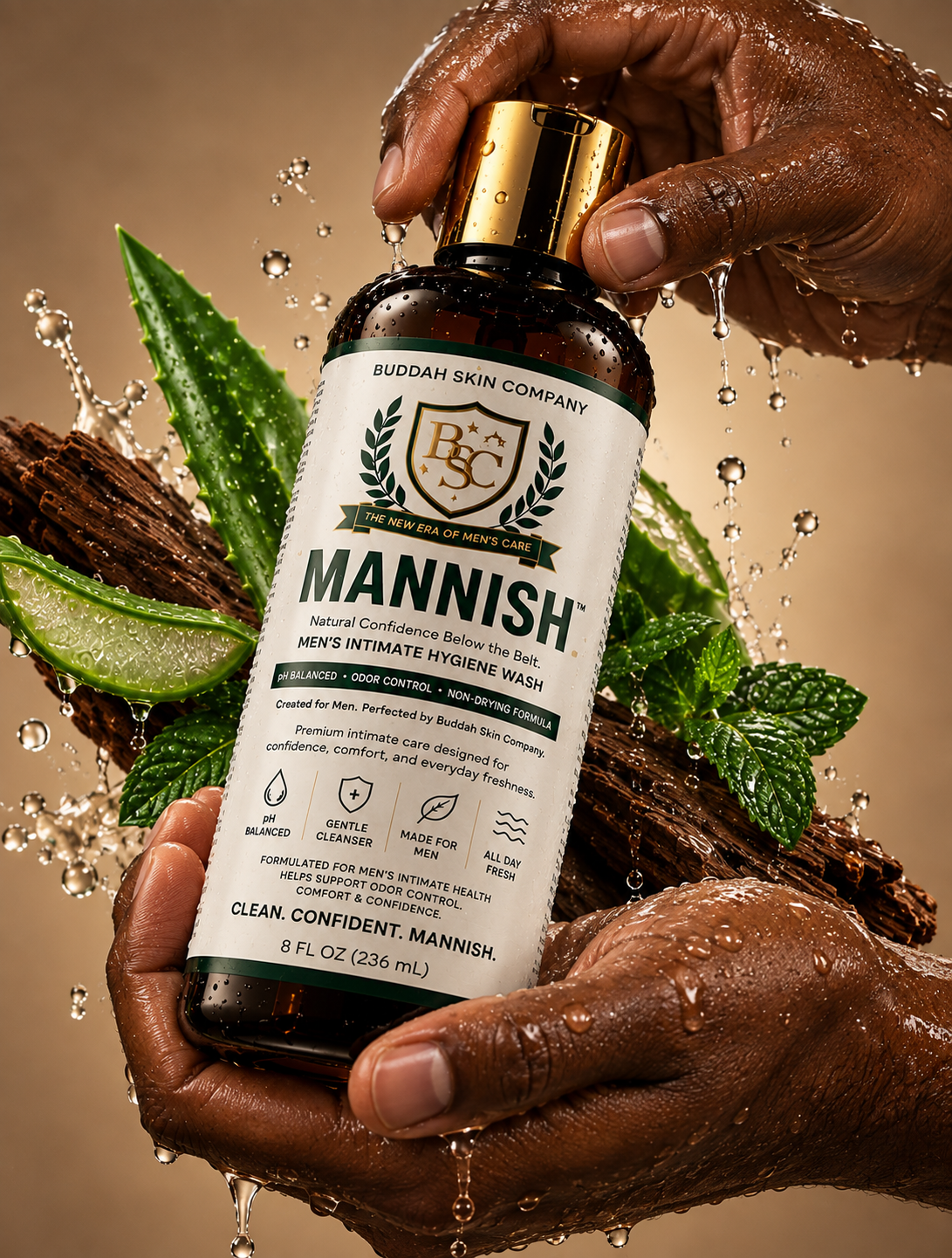
A Research-Informed White Paper
Prepared for: Buddah Skin Company
Product: Mannish Men’s Hygiene Wash
Founder & CEO: Willie Eaton III
2026
Executive Summary
Men’s personal care is undergoing a cultural shift. Hygiene is increasingly being understood not simply as a matter of appearance, but as part of physical health, confidence, self-respect and overall well-being.
The Centers for Disease Control and Prevention (CDC) defines personal hygiene as behaviors such as regularly washing the body and hair, maintaining facial cleanliness and other practices that promote health. (CDC)
At the same time, men’s health continues to face significant challenges. In the United States, male life expectancy at birth was 76.5 years in 2024, compared with 81.4 years for females—a 4.9-year difference. (CDC)
Mental health represents another major concern. CDC data show that 48,824 people died by suicide in the United States in 2024, and the suicide rate among males was nearly four times the rate among females. (CDC)
Research increasingly points toward cultural expectations surrounding masculinity as one factor influencing how men approach mental-health support. A 2025 meta-analysis examining 35 samples found that stronger endorsement of traditional masculinity was associated with more negative attitudes toward psychological help-seeking and greater self-stigma around seeking help. (PubMed)
These findings highlight the need to redefine what self-care means for men.
Mannish, developed by Buddah Skin Company, enters this conversation through one of the most basic and universal forms of self-care: personal hygiene.
The brand’s philosophy is straightforward:
Taking care of yourself is not a weakness. It is a form of self-respect.
Mannish is not positioned as a treatment for mental illness, nor does using a hygiene product directly treat depression, anxiety or other mental-health conditions. Instead, Mannish seeks to contribute to a broader cultural shift in which men are encouraged to care for their bodies, become more comfortable discussing health and recognize that physical and mental well-being both deserve attention.
1. The Men’s Health Gap
Men experience significant health disparities in the United States.
According to final 2024 mortality data from the National Center for Health Statistics, life expectancy at birth was:
Population
Life Expectancy, 2024
U.S. population
79.0 years
Females
81.4 years
Males
76.5 years
The nearly five-year difference between male and female life expectancy illustrates the broader need for stronger engagement with men’s health. (CDC)
Mental health adds another dimension.
In 2024, suicide was the 10th leading cause of death in the United States, with 48,824 deaths. The male suicide rate was nearly four times the female rate. (CDC)
These statistics do not mean that hygiene products can solve men’s health disparities.
They demonstrate something more important:
Men need more opportunities to engage with their health.
That engagement can include medical care, mental-health services, exercise, nutrition, relationships, emotional support—and everyday personal care.
2. Hygiene Is More Than Appearance
Hygiene is often presented as a matter of looking or smelling good.
That definition is incomplete.
The CDC describes personal hygiene as practices that help maintain cleanliness and promote health. (CDC)
Good hygiene can include:
Bathing and washing the body
Washing hands
Facial cleansing
Oral care
Grooming
Caring for intimate areas
Changing clothing regularly
Managing sweat and odor
Maintaining healthy skin-care routines
For men, these behaviors can become part of a larger routine of intentional self-care.
The distinction matters.
Self-care is not vanity.
Self-care is the practice of recognizing that your physical and emotional well-being deserve attention.
3. The Masculinity Barrier
One of the most important issues in men’s health is not simply whether information exists.
It is whether men feel comfortable acting on that information.
A 2025 systematic review examined 47 studies concerning traditional masculinity norms and men’s willingness to seek mental-health support. The review found that traditional masculine norms can discourage men from seeking mental-health assistance and emphasized the importance of culturally sensitive approaches. (PubMed)
A separate 2025 meta-analysis found significant relationships between traditional masculinity and negative attitudes toward psychological help-seeking, as well as greater self-stigma around seeking help. (PubMed)
Earlier systematic-review research reached similar conclusions, finding that conformity to traditional masculine norms can affect how men experience symptoms, think about seeking help and manage depression. (PubMed)
This creates an opportunity to redefine masculinity.
Instead of:
“A man should handle everything himself.”
The message can become:
“A man should take responsibility for himself—including knowing when he needs help.”
4. Introducing Mannish
The New Era of Men’s Care
Mannish is a men’s hygiene wash created by Buddah Skin Company.
The product was developed around a simple idea:
Men deserve products and conversations that make taking care of themselves feel normal.
Mannish is specifically positioned around men’s everyday hygiene, including intimate hygiene.
According to Buddah Skin Company’s product formulation information, Mannish is:
pH balanced
Paraben free
Gluten free
Vegan
Non-drying
Designed to support odor control
The formulation includes ingredients such as organic aloe vera juice, jojoba oil and vitamin E, alongside cleansing and conditioning ingredients.
These product details are brand-supplied formulation claims and should ultimately be supported by the final product label, formulation documentation and applicable regulatory review before being used in regulated marketing claims.
5. Why Men’s Intimate Hygiene Matters
Men’s intimate hygiene remains an area where education can be limited.
Conversations about men’s bodies are often dominated by humor, embarrassment or sexual stereotypes.
Mannish takes a different approach.
The objective is not to make men feel ashamed of their bodies.
It is to make intimate hygiene normal.
Men experience sweat, friction, moisture and odor just as humans do. Physical activity, workouts, long workdays and everyday life can all make intimate hygiene an important component of personal care.
The goal should therefore be:
Education instead of embarrassment.
Confidence instead of shame.
Routine instead of avoidance.
Mannish is designed to participate in that conversation.
6. Hygiene and the Skin Barrier
Effective hygiene does not mean aggressively stripping the skin.
Research published through the CDC’s Emerging Infectious Diseases journal has examined the relationship between skin cleansing, infection prevention and skin integrity. The literature notes that repeated washing and exposure to certain detergents can contribute to skin irritation and damage, particularly with frequent washing. (CDC)
This reinforces an important principle for modern men’s personal care:
Clean does not have to mean harsh.
The objective of a personal-care routine should be appropriate cleansing while respecting the skin.
That principle is particularly relevant as men become more educated about ingredients, skin health and product selection.
7. From Physical Care to Mental Well-Being
The connection between hygiene and mental health should be described carefully.
There is no evidence that using Mannish treats depression, anxiety, suicidal thoughts or other mental-health conditions.
However, personal-care routines can become part of a broader culture of self-awareness.
A man who learns to care for his skin can also become more comfortable thinking about his body.
A man who becomes comfortable discussing his hygiene can become more comfortable discussing other health concerns.
A man who learns that asking for help is responsible—not weak—may become more open to seeking professional support when necessary.
This is the cultural opportunity for Mannish.
The product does not have to be the solution to every problem.
It can be an entry point into a larger conversation.
8. Why This Matters for Men’s Health
Mannish represents a potentially valuable intersection between consumer products, health education and cultural change.
The opportunity can be understood through five pillars:
1. PHYSICAL HEALTH
Men deserve accessible information and products that encourage appropriate personal hygiene.
2. BODY CONFIDENCE
Healthy hygiene can help men feel more comfortable and confident in their bodies without promoting shame or unrealistic appearance standards.
3. MENTAL HEALTH AWARENESS
Men should be encouraged to recognize that mental health is part of health—and that seeking help is not a failure of masculinity.
4. PREVENTION AND EARLY AWARENESS
A culture that encourages men to pay attention to their bodies can also encourage them to notice changes and seek appropriate medical advice.
5. A NEW DEFINITION OF MASCULINITY
Strength can include vulnerability, self-awareness, responsibility and the willingness to care for yourself.
9. Mannish as a Cultural Movement
Mannish has the opportunity to become more than a hygiene product.
It can become a platform for men’s wellness education.
Potential future initiatives could include:
Mannish Men’s Health Conversations
Educational content addressing hygiene, skin care, sexual health, mental health and preventive care.
Mannish Mental Health Campaigns
Partnerships with qualified mental-health professionals and men’s organizations to normalize conversations about emotional wellness.
Campus Men’s Wellness Programs
Educational activations at colleges and universities focused on hygiene, confidence and healthy masculinity.
Men’s Hygiene Education
Straightforward education about intimate hygiene, body odor, skin health and appropriate cleansing.
Mannish Community Partnerships
Collaborations with barbershops, gyms, athletic organizations, men’s groups and community organizations where men already gather.
The objective would be to bring health conversations into environments where men naturally feel comfortable.
10. The New Definition of Self-Care
For years, self-care has often been marketed through the language of luxury.
Mannish proposes another definition.
Self-care can be simple.
It can be taking a shower after a long day.
It can be washing your face.
It can be moisturizing your skin.
It can be taking care of your intimate hygiene.
It can be going to the doctor.
It can be calling your friend.
It can be saying, “I’m not okay.”
It can be going to therapy.
It can be resting.
It can be asking for help.
Self-care is not about being perfect.
It is about recognizing that you are worth caring for.
11. Conclusion
The future of men’s personal care is bigger than grooming.
It is about wellness.
It is about confidence.
It is about education.
It is about normalizing conversations that men have historically avoided.
Most importantly, it is about changing the idea that caring for yourself somehow makes you less masculine.
The research shows that traditional masculinity can create barriers to mental-health help-seeking. (PubMed)
The public-health data show substantial disparities in men’s health outcomes, including life expectancy and suicide. (CDC)
And basic hygiene remains an important component of maintaining cleanliness and health. (CDC)
Mannish sits at the intersection of these conversations.
It doesn’t claim to cure mental-health problems.
It doesn’t claim that a hygiene wash can solve men’s health disparities.
Instead, it promotes a much simpler—and potentially more powerful—idea:
Men should care about themselves.
They should care about their bodies.
They should care about their hygiene.
They should care about their health.
They should care about their minds.
And they should feel comfortable asking for help when they need it.
That is the opportunity behind Mannish.
MANNISH
The New Era of Men’s Care
Hygiene is health.
Self-care is strength.
Mental health matters.
Taking care of yourself is never something to be ashamed of.
References
Centers for Disease Control and Prevention. (2025). Hygiene Basics. (CDC)
Centers for Disease Control and Prevention, National Center for Health Statistics. (2026). Mortality in the United States, 2024: NCHS Data Brief No. 548. (CDC)
Centers for Disease Control and Prevention. (2026). Suicide Data and Statistics. (CDC)
Centers for Disease Control and Prevention, National Center for Health Statistics. (2025). Changes in Suicide Rates in the United States From 2022 to 2023: NCHS Data Brief No. 541. (CDC)
Üzümçeker, E. (2025). Traditional Masculinity and Men’s Psychological Help-Seeking: A Meta-Analysis. International Journal of Psychology, 60(2), e70031. (PubMed)
Mokhwelepa, L. W., & Sumbane, G. O. (2025). Men’s Mental Health Matters: The Impact of Traditional Masculinity Norms on Men’s Willingness to Seek Mental Health Support; a Systematic Review. American Journal of Men’s Health. (PubMed)
Rice, S. M., et al. (2016). The role of masculinity in men’s help-seeking for depression: A systematic review. Clinical Psychology Review. (PubMed)
Centers for Disease Control and Prevention. (2001). Hygiene of the Skin: When Is Clean Too Clean? Emerging Infectious Diseases. (CDC)
Important Research & Marketing Note
This document is a research-informed brand white paper, not a clinical study of Mannish. The mental-health and men’s-health research cited here supports the broader cultural argument around men’s self-care and help-seeking; it does not demonstrate that Mannish itself improves mental health or prevents disease.